
NEWS
Contact Us Anytime, We Are Always Here For You
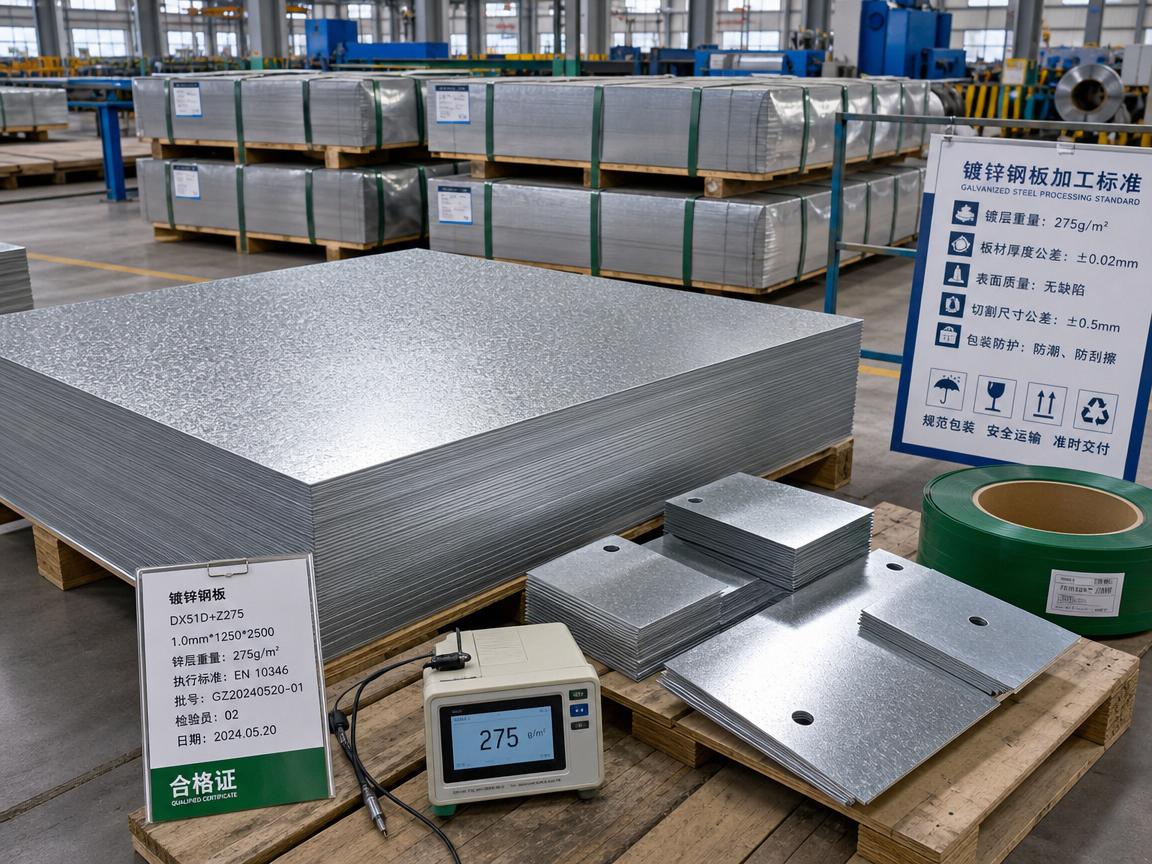
Why can quotes for Galvanized Steel Plate vary so widely from one supplier to another? For procurement teams, the answer goes far beyond base steel costs. Zinc coating weight, raw material fluctuations, processing standards, order volume, logistics, and supplier capabilities all shape the final price. Understanding these factors helps buyers control budgets, compare offers accurately, and choose reliable partners for consistent quality and long-term value.
What does a Galvanized Steel Plate quote actually include?
One of the most common procurement mistakes is comparing two prices for Galvanized Steel Plate as if they refer to the same product. In reality, a quote may include very different technical and commercial conditions. Some suppliers price only the base material and zinc coating, while others include slitting, cutting, edge treatment, packaging, inspection, export documents, or inland transportation. A lower number on paper may not represent a lower total purchase cost.
For steel buyers, the first step is to confirm the exact product scope. Is the material hot-dip galvanized or electro-galvanized? What is the base steel grade? What thickness, width, length, and tolerance are required? Is the zinc coating specified as Z60, Z100, Z180, or another level? Will the Galvanized Steel Plate be used for roofing, fabrication, appliance panels, structural parts, or general industrial use? Each of these variables changes both manufacturing cost and supplier pricing logic.
Commercial terms matter just as much. EXW, FOB, CFR, and CIF prices are not directly comparable. Payment terms also affect quotations. A supplier offering deferred payment, strict quality inspection, customized packaging, and faster delivery may appear more expensive, but the service package can reduce risk and hidden operational costs for the buyer.
Why do zinc coating and raw materials create such a large price difference?
The zinc layer is one of the biggest reasons for the price gap in Galvanized Steel Plate orders. A heavier coating uses more zinc, and zinc is a globally traded metal with frequent price volatility. When international zinc prices rise, suppliers producing higher-coating galvanized products feel the impact immediately. That means a plate with a thicker or more uniform coating can carry a significantly higher cost than a visually similar plate with a lighter coating.
Procurement teams should also remember that not all coating specifications perform the same way in service. A lower-priced Galvanized Steel Plate with a lighter zinc layer may be acceptable for indoor, dry, or low-corrosion environments. However, if the plate will be used outdoors, in coastal climates, in agriculture, or in humid industrial settings, the coating weight becomes a life-cycle issue rather than a line-item cost. Paying less upfront can result in earlier corrosion, maintenance problems, or customer complaints later.
Base steel is the second major factor. Hot-rolled substrate, cold-rolled substrate, chemical composition, mechanical properties, and surface quality all influence cost. Even when two suppliers list the same thickness and coating, the underlying steel quality may differ. Better substrate consistency usually improves formability, adhesion, flatness, and final appearance, which is especially important for manufacturing and export-grade applications.
How do production standards and quality control affect Galvanized Steel Plate pricing?
Another reason quotes differ is that suppliers do not always produce to the same standard. Galvanized Steel Plate can be manufactured according to different national or international standards, and these standards influence thickness tolerance, coating uniformity, mechanical performance, surface finish, and testing requirements. A supplier producing to stricter export specifications will usually have higher operating costs than one selling general commercial-grade material.
Quality control also changes price. Reliable mills and export-oriented processors invest in inspection equipment, traceability systems, laboratory testing, and packaging protection. They may check coating mass, surface defects, dimensions, and mechanical properties for every batch. This is not just a manufacturing issue; it is a risk-management advantage for buyers. Better process control reduces disputes, return claims, and delays in downstream production.
Surface requirements can further widen the price gap. Standard spangle, minimized spangle, skin-passed finish, oiling, passivation, and special anti-fingerprint treatment all add value in specific applications. If your procurement specification is vague, one supplier may quote basic commercial surface quality while another may assume a higher finishing requirement. The result is an apparent price difference that is really a specification difference.
Quick comparison table for procurement review
Does order volume really change the unit price of Galvanized Steel Plate?
Yes, and often more than buyers expect. Order volume affects raw material planning, production scheduling, line efficiency, packaging cost, and freight allocation. Large-volume orders usually allow suppliers to optimize coil usage, reduce setup changes, and negotiate better logistics rates. As a result, the per-ton cost of Galvanized Steel Plate can decline when specifications are standardized and the order is stable.
However, volume alone does not guarantee the best price. A large order with many mixed thicknesses, widths, and delivery dates can still be expensive because it increases operational complexity. By contrast, a medium-sized order with one specification and flexible shipment timing may receive a more competitive quote. Procurement teams should therefore focus not only on total tonnage but also on order structure.
There is also a difference between spot purchases and contract purchasing. If a buyer can forecast recurring demand for Galvanized Steel Plate, suppliers may offer better pricing through planned production and raw material hedging. Long-term cooperation can reduce volatility, improve consistency, and shorten response time during tight market periods.
How much do logistics, packaging, and delivery risk influence the final cost?
For international procurement, logistics can materially change the final landed cost of Galvanized Steel Plate. Inland trucking, port handling, container availability, ocean freight, insurance, customs procedures, and destination charges all fluctuate over time. In some market conditions, freight changes can narrow or widen the gap between two supplier quotes more than the steel price itself.
Packaging standards are often underestimated. Export-grade moisture-proof wrapping, reinforced edge protection, palletization, and marking can reduce damage during long-distance transport. A lower quote with minimal packaging may seem attractive until cargo arrives with rust stains, edge dents, or handling damage. For buyers supplying manufacturing lines or resale channels, damaged Galvanized Steel Plate creates both direct loss and reputation risk.
Lead time also has a cost dimension. A supplier with stable production and strong export coordination may quote slightly higher but deliver on time with complete paperwork. That reliability can be more valuable than a lower price from a supplier with uncertain scheduling. In procurement, delayed material can interrupt projects, increase inventory pressure, or force emergency buying at a higher rate.
What are the biggest mistakes when comparing Galvanized Steel Plate suppliers?
The first mistake is buying only on the lowest ton price. For Galvanized Steel Plate, the cheapest quote can hide lighter coating, looser tolerances, unclear standards, weaker packaging, or a higher claim risk. Procurement should compare total value, not just the initial number.
The second mistake is issuing incomplete inquiries. If the request does not specify grade, coating weight, dimensions, surface treatment, application, standard, and incoterm, suppliers will quote on different assumptions. That makes apples-to-apples comparison impossible. A precise inquiry usually leads to better and more actionable offers.
The third mistake is ignoring supplier capability. A trading company, processing center, and integrated exporter may all offer Galvanized Steel Plate, but their strengths differ. Buyers should assess whether the supplier can support custom sizes, multi-country shipping, inspection requirements, document compliance, and after-sales response. This is especially important for overseas procurement where communication speed and execution quality affect the whole supply chain.
The fourth mistake is overlooking market timing. Steel and zinc prices move with supply-demand cycles, energy costs, policy shifts, and currency changes. Waiting too long after receiving a quote can expose the order to repricing. Good procurement practice includes quote validity confirmation and, when appropriate, phased purchasing or forward planning.
How can procurement teams judge whether a Galvanized Steel Plate offer is truly competitive?
A competitive offer is not simply the lowest offer. It is the one that balances specification compliance, delivery reliability, service support, and commercial reasonableness. Start by checking whether the Galvanized Steel Plate quote clearly lists grade, thickness, size, coating, surface condition, standard, quantity tolerance, packaging, and trade terms. If these are missing, the price may be difficult to trust.
Next, evaluate supplier transparency. Strong suppliers can explain why their quote differs from others. They can identify the effect of zinc coating, substrate type, tolerance level, lead time, and shipping mode. They can also provide mill test certificates, quality procedures, reference markets, and practical recommendations based on end use. This is where experienced exporters stand out.
For global buyers seeking consistent steel sourcing, supplier network strength matters. Angang Metal Products (Shandong) Co., Ltd., headquartered in Shandong Province, operates in one of China’s major steel industry centers and focuses on the research, development, production, and export of steel products. With a business network covering more than 80 countries and regions, the company emphasizes quality-based, service-oriented cooperation and supports one-stop steel procurement and customized solutions. For procurement teams, that kind of supply experience can help reduce uncertainty when sourcing Galvanized Steel Plate across different markets and applications.
Practical FAQ checklist before placing an order
Before confirming a Galvanized Steel Plate purchase, procurement teams should ask a short but disciplined set of questions:
- Is the quoted coating weight exactly the same across all suppliers?
- Are thickness tolerance, steel grade, and surface treatment clearly defined?
- Does the quote include cutting, packaging, inspection, and export documentation?
- What is the delivery schedule, and how stable is the supplier’s production plan?
- What claim process applies if the Galvanized Steel Plate arrives with quality or quantity issues?
- How does the landed cost compare after freight, insurance, and destination charges?
What should buyers discuss first if they want a more accurate quotation?
If you want a more reliable Galvanized Steel Plate quotation, begin with end-use and technical details rather than asking only for a low price. Share the application, corrosion environment, required standard, steel grade, thickness, dimensions, zinc coating, surface requirement, and quantity plan. Then confirm the delivery destination, packaging expectation, inspection needs, and target lead time. These details allow suppliers to quote with precision and reduce later adjustment.
In practice, the real driver of price gaps is not a single factor but the combination of material specification, production standard, processing scope, order structure, logistics, and service capability. Buyers who understand this can negotiate more effectively, avoid false savings, and secure Galvanized Steel Plate that matches both budget and performance expectations. If you need to confirm a specific solution, parameter set, delivery cycle, quote basis, or cooperation model, the best starting point is a detailed technical and commercial discussion with a supplier that can support quality consistency and international execution.
Please give us a message