
NEWS
Contact Us Anytime, We Are Always Here For You
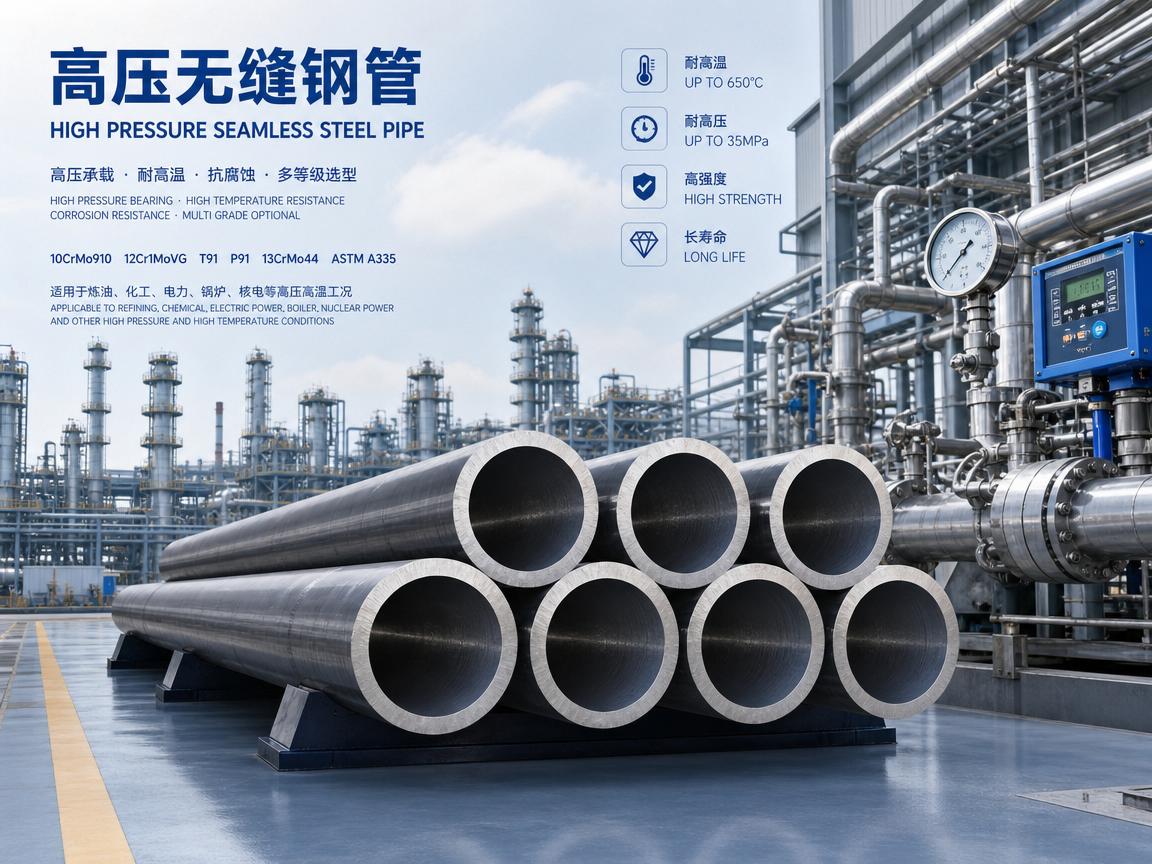
Choosing the right Seamless Steel Pipe grade is critical for high-pressure systems where safety, strength, and long-term performance cannot be compromised. For project managers and engineering leaders, understanding how different grades affect pressure resistance, temperature tolerance, and application fit is essential to making cost-effective and reliable decisions. This guide explains the key Seamless Steel Pipe grades used in demanding industrial environments.
Why grade selection is becoming a bigger decision in high-pressure projects
The market for high-pressure piping is changing. Energy transition projects, refinery upgrades, industrial retrofits, boiler replacement programs, and stricter plant safety expectations are all pushing buyers to look beyond basic availability. In the past, many procurement decisions for Seamless Steel Pipe were driven mainly by diameter, wall thickness, and price. Today, grade selection has become more strategic because operating conditions are becoming more demanding, downtime is more expensive, and compliance expectations are higher across global supply chains.
For project managers, this shift matters because a wrong grade can create a chain reaction of cost overruns: requalification, welding issues, shortened service life, inspection failures, or premature replacement. A correctly selected Seamless Steel Pipe grade, by contrast, supports stable pressure containment, better fabrication performance, and more predictable maintenance cycles. In other words, grade selection is no longer only a technical detail handled late in procurement; it is an early-stage project risk decision.
Key trend signals shaping demand for Seamless Steel Pipe grades
Several industry signals explain why demand is shifting toward more deliberate grade matching. First, operating environments are becoming more diverse. High-pressure systems now span conventional oil and gas, power generation, petrochemical processing, hydraulic systems, and specialized process lines with elevated temperature or corrosive media. Second, procurement teams are facing greater pressure to balance capital cost with lifecycle value. Third, global buyers increasingly require traceability, standard compliance, and documentation quality from steel suppliers.
These signals are changing how Seamless Steel Pipe is evaluated. Buyers are not only asking what fits the design pressure today, but also what can maintain performance under thermal cycling, fluctuating loads, welding heat input, and long service intervals. This is why grades such as ASTM A106, ASTM A53 seamless types, ASTM A333 low-temperature grades, and alloy grades like ASTM A335 are receiving closer attention in engineering reviews.
What the most common Seamless Steel Pipe grades mean in practical project terms
For engineering leaders, the most useful way to understand grades is not as a list of specifications, but as a decision map tied to service conditions. Carbon steel seamless grades remain the backbone of many high-pressure applications, but their suitability differs significantly depending on temperature, pressure, and fabrication requirements.
ASTM A106 Grade B and Grade C
ASTM A106 is one of the most widely used Seamless Steel Pipe standards for high-temperature service. Grade B is often the default choice in power plants, refineries, and process piping because it offers a strong balance of mechanical properties, availability, and cost. Grade C provides higher strength and may be selected where design pressure or wall optimization matters, though fabrication and sourcing considerations must still be reviewed carefully.
ASTM A53 seamless pipe
ASTM A53 seamless pipe appears in many general industrial systems, but project teams should be cautious about assuming it is interchangeable with A106 in all high-pressure conditions. It can work well in mechanical and pressure applications within its intended range, yet for more severe high-temperature service, engineers often prefer A106 because the service expectation is clearer. The trend here is toward less substitution without technical review.
ASTM A333 low-temperature grades
As LNG, cold-region infrastructure, and temperature-sensitive process systems expand, low-temperature performance is attracting more attention. ASTM A333 grades are selected where notch toughness at low temperature matters. This is a strong example of how application-specific demand is reshaping Seamless Steel Pipe purchasing. A pipe that performs well in ambient conditions may be unsuitable in cold service if impact toughness is not considered.
ASTM A335 alloy steel grades
For elevated temperature and high-pressure service, alloy Seamless Steel Pipe grades such as P11, P22, and other ASTM A335 options are increasingly important. They are used where creep resistance, oxidation resistance, and sustained strength at temperature are necessary. The trend behind their growing relevance is simple: modern plants are expected to run hotter, longer, and more efficiently, which increases the cost of under-specifying material.
The main drivers behind changing grade preferences
The shift in Seamless Steel Pipe grade selection is not random. It is driven by technical, commercial, and operational factors that are all becoming more visible in project execution.
- Higher reliability expectations in critical infrastructure
- More exact alignment between code requirements and actual service conditions
- Greater awareness of total installed cost, including welding, testing, and maintenance
- Need for stable export supply from qualified steel manufacturers
- Increasing importance of documentation, mill test certificates, and heat traceability
For international buyers, supply chain consistency is also a major driver. A technically suitable Seamless Steel Pipe grade still becomes a project risk if chemistry control, dimensional tolerance, or delivery reliability are weak. That is why supplier capability now matters as much as nominal grade selection. Companies with integrated production understanding, export experience, and responsive technical service are better positioned to support high-pressure projects across multiple regions.
How these changes affect project managers, procurement teams, and engineering leaders
Different roles feel the impact of Seamless Steel Pipe grade decisions in different ways. The technical team cares about pressure integrity and code compliance. Procurement focuses on lead time, cost, and supplier reliability. Project managers must coordinate all of these factors while protecting schedule and budget. The result is that grade selection has become more cross-functional than before.
What to watch when comparing grades for high-pressure use
A strong purchasing decision starts by translating operating data into grade criteria. Project teams should review not only pressure rating, but also service temperature, fluid characteristics, cyclic loading, corrosion allowance, weldability, inspection plan, and applicable standards. In many cases, the most expensive mistake is choosing a Seamless Steel Pipe grade that appears acceptable in isolation but is weak when viewed across the full installation and service lifecycle.
There is also a growing trend toward earlier supplier involvement. This does not mean outsourcing engineering judgment. It means using supplier input to confirm production route, dimensional tolerances, available heat treatment condition, and export packaging requirements before procurement is locked. For complex projects, that early alignment can reduce both technical and commercial uncertainty.
A practical decision path for the next procurement cycle
If your team is preparing a new purchase package for Seamless Steel Pipe, a useful approach is to move through the decision in stages rather than jumping from design data straight to RFQ. This supports better grade discipline and fewer mid-project adjustments.
Why supplier capability is part of the grade decision
In global steel procurement, material grade and supplier capability are tightly linked. A grade on paper only creates value when manufacturing control, testing discipline, and export coordination are strong enough to deliver the intended performance in practice. This is especially true for high-pressure applications, where consistency between batches, dimensional precision, and documentation quality directly influence inspection approval and installation progress.
Angang Metal Products (Shandong) Co., Ltd., based in one of China’s major steel industry centers, serves international buyers with a quality-based, service-oriented approach across more than 80 countries and regions. For project-driven customers, this kind of supply partner can help streamline one-stop steel procurement and support customized solutions when Seamless Steel Pipe requirements involve multiple standards, mixed grades, or coordinated export delivery schedules.
Final judgment: what matters most in the next phase of the market
The biggest change in the market is not that new Seamless Steel Pipe grades suddenly exist. It is that buyers are being forced to make more precise decisions about where each grade truly fits. As pressure levels, temperature requirements, compliance scrutiny, and lifecycle expectations rise, grade selection becomes a frontline management issue rather than a back-office technical formality.
For project managers and engineering leaders, the best response is to focus on a few practical questions: Are current specifications aligned with real operating conditions? Are substitutions being reviewed with enough discipline? Does the supplier provide the traceability and consistency needed for high-pressure service? And does the selected Seamless Steel Pipe grade reduce total execution risk, not just purchase cost?
If your business is evaluating how these market changes affect upcoming piping projects, the next useful step is to review service conditions, required standards, and supply expectations together before issuing procurement decisions. That is often where better grade judgment, better cost control, and better project outcomes begin.
Please give us a message