NEWS
Contact Us Anytime, We Are Always Here For You
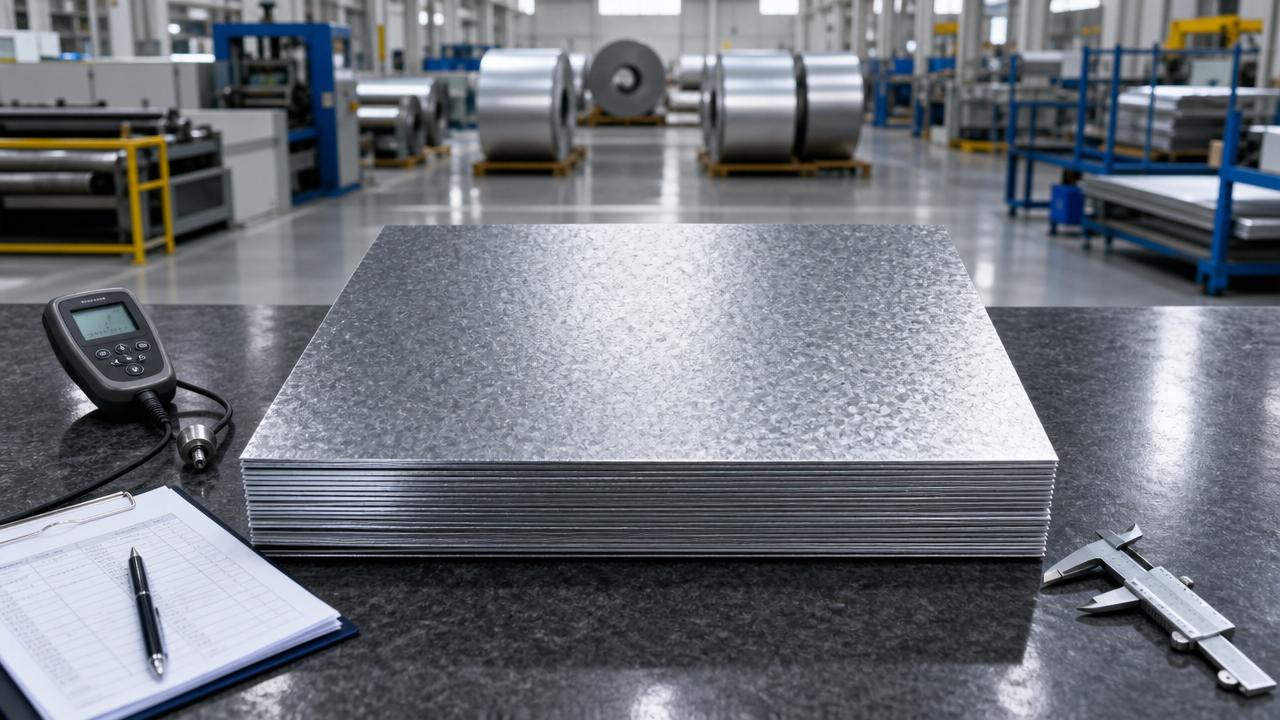
Before galvanized steel plate enters fabrication or installation, inspection is not a formality. It is a direct control step for durability, corrosion resistance, fit-up accuracy, and downstream safety.
A reliable galvanized steel plate should combine sound base metal, stable zinc coating, clean surface condition, and correct dimensions. Missing any of these checks can create coating loss, red rust, assembly errors, or early service failure.
This guide explains the key quality checks before use, why they matter in steel applications, and how to build a practical inspection routine that supports compliance and performance.
What Galvanized Steel Plate Quality Means in Practice
Galvanized steel plate is carbon steel protected by a zinc coating. The coating acts as a barrier and also offers sacrificial protection when the surface is damaged.
In practical use, quality is judged by both the steel substrate and the galvanized layer. A bright appearance alone does not confirm that the material is ready for processing or outdoor exposure.
The most important checks usually include coating thickness, coating uniformity, adhesion, surface defects, plate flatness, dimensions, edge condition, and traceable documentation.
For many projects, galvanized steel plate also needs to meet standards linked to forming, welding, painting, or bolting. Inspection should therefore match the intended application, not only warehouse appearance.
Current Industry Focus Before Galvanized Steel Plate Use
Recent quality concerns in steel supply chains often come from mixed batches, storage damage, unclear standards, and mismatch between coating class and service environment.
The table below shows the inspection signals that usually deserve early attention before galvanized steel plate is approved for use.
Core Inspection Points for Galvanized Steel Plate
1. Verify material identity and standards
Start with the basic records. Check grade, coating designation, heat number, size, production standard, and order specification against packing labels and certificates.
A galvanized steel plate intended for indoor panels may not suit marine supports or heavy forming. Wrong specification is a common source of hidden failure.
2. Check zinc coating thickness
Coating thickness is one of the most critical quality indicators for galvanized steel plate. It directly affects corrosion life in humid, industrial, and outdoor environments.
Use a calibrated coating thickness gauge where applicable. Measure at multiple points across the plate, including center, edges, and representative areas from each batch.
Compare average and minimum readings with the required standard. One high reading does not offset several low ones in exposed service conditions.
3. Assess coating uniformity
Uniform coating supports even corrosion protection. Visible dark patches, mottled areas, or inconsistent spangle may suggest process variation or localized coating loss.
Uniformity should be judged by both appearance and measured values. Plates from the same bundle should show stable coating behavior, not random extremes.
4. Inspect surface defects carefully
Surface defects can reduce usability, coating continuity, or appearance quality. Review both sides under good light before cutting or installation.
- Bare spots
- Scratches and impact marks
- Ash inclusions or rough zinc buildup
- Peeling, flaking, or blistering
- Oil, dirt, or chemical residue
- White rust from wet storage
Some visual variations are acceptable under certain standards. However, any defect exposing base steel should be evaluated strictly before the galvanized steel plate is released.
5. Confirm adhesion and coating integrity
A galvanized steel plate may pass appearance checks but still fail during bending, punching, or transport if adhesion is weak.
Where required, use standard bend or adhesion-related inspection methods. Look for peeling at edges, cracks after forming, or loose coating near cut sections.
6. Measure dimensions and shape
Thickness, width, length, squareness, edge wave, and flatness influence fabrication efficiency. Dimensional issues can stop installation even when coating quality is acceptable.
Use calibrated tools and check tolerance limits against the order or standard. For formed or precision parts, dimensional consistency is often as important as corrosion resistance.
7. Review edge condition and cut quality
Damaged edges can start corrosion quickly, especially in humid storage. Burrs, edge cracks, and coating breakout should be identified before processing.
If the galvanized steel plate will be exposed after cutting, edge protection planning may also be necessary.
Why These Checks Create Real Business Value
Thorough inspection reduces reject rates, protects project schedules, and improves service life. It also helps control hidden costs that appear only after fabrication or installation.
When galvanized steel plate quality is confirmed early, forming behavior becomes more predictable, coating repair work decreases, and warranty disputes become easier to manage.
For export and multi-site projects, traceable quality checks also support consistent acceptance standards across batches, countries, and end-use sectors.
Angang Metal Products (Shandong) Co., Ltd. supports this approach through quality-focused steel supply, international export experience, and customized solutions for different application requirements.
Typical Use Scenarios and Inspection Priorities
Different applications require different emphasis. The same galvanized steel plate inspection routine should be adjusted to the actual service environment and fabrication method.
Practical Inspection and Storage Recommendations
A good quality plan for galvanized steel plate should be simple, repeatable, and documented. It does not need to be complicated to prevent major problems.
- Inspect incoming material by batch, not by a single sheet.
- Record coating readings and visual findings with date and heat reference.
- Separate suspect bundles immediately to avoid mixed usage.
- Store galvanized steel plate in dry, ventilated conditions.
- Avoid water trapping between stacked sheets.
- Protect surfaces from forklift damage and dragging contact.
- Match inspection criteria to forming, welding, or outdoor exposure needs.
If defects appear after unpacking, review whether the cause is manufacturing, transit handling, or storage condition. Correct root-cause judgment is essential for fair acceptance and prevention.
Next-Step Approach Before Release to Production
Before any galvanized steel plate is cut, welded, formed, or installed, confirm three things: specification match, physical inspection status, and storage condition since delivery.
A short release checklist often works best. It keeps standards visible and prevents defective material from moving into expensive downstream stages.
For projects requiring stable export-grade steel supply, traceable documents, and customized specifications, a qualified partner can simplify inspection and reduce uncertainty from the start.
Used correctly, galvanized steel plate delivers long service life and dependable corrosion protection. That reliability begins with disciplined quality checks before use, not after failure appears.
Please give us a message