NEWS
Contact Us Anytime, We Are Always Here For You
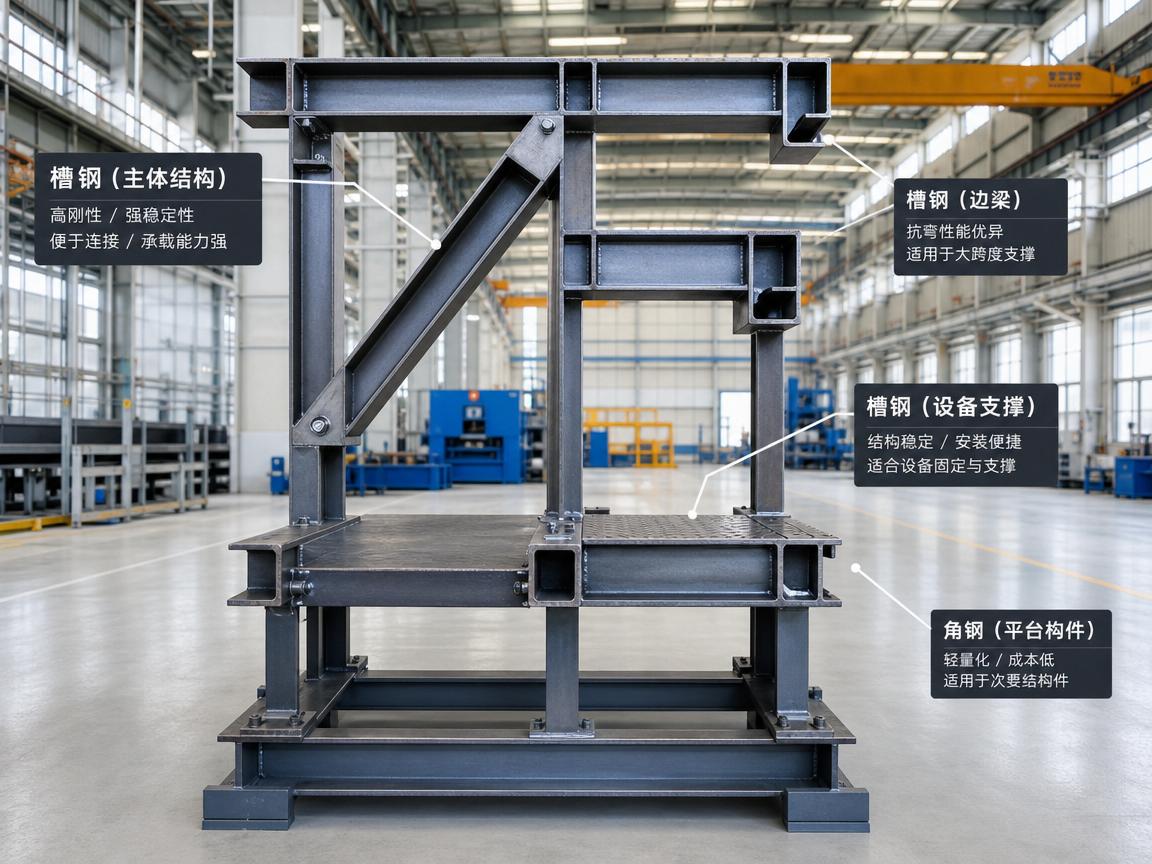
In frame design, choosing between angle and Steel Channel can significantly affect load capacity, stability, fabrication efficiency, and total project cost. For technical evaluators, understanding where Steel Channel delivers superior structural performance is essential to making reliable, cost-effective decisions. This article explores the key design scenarios, mechanical advantages, and practical considerations that determine when Steel Channel becomes the better choice.
Why a checklist-based evaluation is the right starting point
For technical assessment work, the question is rarely whether angle sections are “good” or whether Steel Channel is “stronger” in every case. The practical question is more specific: under which loading, support, connection, and fabrication conditions does Steel Channel outperform angle in a frame system? A checklist approach is useful because frame behavior depends on several interacting variables, including bending direction, torsional restraint, eccentricity, connection detailing, span length, and installation sequence.
In steel procurement and engineering review, fast decisions made without checking these items can lead to overdesign, poor weld access, unnecessary stiffeners, or unstable members that appear economical only on paper. A structured review helps technical evaluators compare alternatives consistently, especially when selecting steel sections for industrial frames, equipment supports, secondary structural members, and fabricated assemblies supplied to international projects.
First-pass decision checklist: when Steel Channel should be reviewed first
If several of the following conditions are present, Steel Channel typically deserves priority evaluation before equal-leg or unequal-leg angle:
- The member works primarily in bending rather than pure tension or light bracing duty.
- The frame requires better stiffness about the major axis with limited section depth.
- Connections need a web-and-flange arrangement for easier bolting, welding, or seat support.
- The design must reduce eccentric loading commonly created by single-angle connections.
- There is moderate compression and a risk of local instability or twist in a slender angle member.
- The frame includes purlin-like, rail-like, edge beam, lintel, or platform members where directional stiffness matters.
- The project values fabrication efficiency and repeatable shop assembly across multiple identical frames.
By contrast, angle may still remain efficient for simple bracing, clip components, truss sub-elements, and lightly loaded framing where connection simplicity and low weight are the main priorities.
Core judgment criteria: where Steel Channel delivers structural advantages
1. When bending performance is more important than minimum weight
One of the clearest cases for Steel Channel is a member subjected to significant bending. Compared with a single angle of similar mass, Steel Channel generally provides a more favorable section geometry for resisting bending about its strong axis. This means lower deflection, better stress distribution, and improved serviceability in members such as side rails, support frames, machine bases, mezzanine edges, and secondary beams.
Technical evaluators should first check the governing limit state. If deflection or vibration is driving the design more than ultimate strength, Steel Channel often becomes the better choice because added stiffness can reduce downstream problems in cladding fit-up, equipment alignment, and fatigue-sensitive attachments.
2. When connection eccentricity must be controlled
Single-angle members often introduce eccentric force transfer because the connected leg may not align well with the member centroid. That can create secondary bending and connection complications, particularly in compression members or heavily loaded frame nodes. Steel Channel provides a web-centered load path that often makes connection behavior more predictable. In practical fabrication, this can simplify base plates, bracket interfaces, and gusset-to-member attachment details.
If your frame node already has high stress concentration, reviewing Steel Channel early may help avoid hidden penalties from eccentric detailing that are not obvious in a preliminary weight comparison.
3. When compression members need better stability
Compression behavior is another critical decision point. Although neither angle nor channel is universally superior in every buckling mode, Steel Channel often performs better where a more balanced shape and greater radius of gyration about the critical axis improve stability. In short columns, frame legs, support posts, and built-up welded supports, this can translate to higher capacity or reduced need for additional restraint.
The check is straightforward: if the member is slender, partially restrained, and expected to carry combined axial load with minor bending, Steel Channel deserves a serious comparison. Angle members can become less efficient when one leg remains relatively unsupported or when the connection arrangement induces out-of-plane effects.
4. When torsional behavior and installation stability matter
During erection or temporary loading stages, thin and asymmetric members can twist unexpectedly. Steel Channel is also an open section and not immune to torsion, but in many frame applications it provides a more manageable geometry than a single angle, especially when loads act near the web line or when flange orientation can be used strategically. For technical evaluators, this matters not only in final design calculations but also in lifting, transport, and field handling risk.
Scenario guide: practical cases where Steel Channel often outperforms angle
- Edge beams and perimeter frames: Steel Channel offers better directional stiffness and cleaner support surfaces for panels, gratings, and equipment attachments.
- Equipment support skids: The section accommodates welded plates and brackets efficiently while improving bending resistance under concentrated loads.
- Platform stringers and stair framing: Serviceability, vibration control, and attachment convenience often favor Steel Channel over a single angle.
- Secondary members in industrial buildings: Where loads are directional and repetitive, Steel Channel supports standardized fabrication and consistent connection details.
- Framed openings, lintels, and support rails: Better bending performance and easier seat-type support make Steel Channel a common choice.
- Short compression posts and braced supports: Channel sections may reduce instability risks that arise with lightly restrained angle members.
Comparison table: fast evaluation points for technical reviewers
Use the following guide as a quick screening tool before moving to detailed structural verification:
Commonly overlooked items that can change the answer
Many section selection errors come from checking only nominal weight and ignoring real project conditions. The following risk reminders are especially relevant when comparing Steel Channel with angle:
- Load direction is not constant: A section that looks efficient in one axis may perform poorly if loads shift during operation or installation.
- Connection cost exceeds material savings: Lighter angle members may require more complex gussets, packing plates, or stiffeners.
- Serviceability is underestimated: Excessive deflection may affect panels, machinery alignment, or operator safety even when strength checks pass.
- Corrosion protection access matters: Geometry influences blasting, coating coverage, drainage, and inspection quality.
- Global sourcing tolerance should be reviewed: Section availability, rolling standards, and dimensional tolerances can affect fit-up and procurement timing.
How to evaluate Steel Channel by application type
Industrial frame systems
Prioritize stiffness, repeatable connection detailing, and long-term maintenance access. Steel Channel is often favored where frame members support pipe racks, equipment, walkways, or modular skids, because these systems combine bending, local bracket loads, and field assembly demands.
Architectural and light structural support
Review appearance, edge support function, and cladding interface. If the member must serve as both structural support and fixing surface, Steel Channel may reduce auxiliary parts and simplify installation sequencing.
Export fabrication and multi-country projects
For international supply chains, evaluators should compare not just section mechanics but also standard compatibility, coating requirements, and workshop preferences. Angang Metal Products (Shandong) Co., Ltd., based in one of China’s major steel industry centers, supports global buyers with steel product development, production, export coordination, and customized sourcing solutions across more than 80 countries and regions. For projects that require consistent quality, scalable production, and one-stop procurement, early confirmation of Steel Channel specifications can reduce redesign and delivery risk.
Execution checklist: what to confirm before final section selection
- Define the governing load case: bending, axial compression, combined loading, or temporary erection load.
- Check the required stiffness, not only the ultimate capacity.
- Review connection eccentricity and whether a single-angle layout introduces secondary moments.
- Confirm support spacing, lateral restraint points, and likely buckling mode.
- Compare fabrication steps, including cutting, coping, drilling, welding, and attachment of plates or brackets.
- Evaluate coating, galvanizing, or corrosion protection requirements.
- Verify regional availability, standards, and mill certification needs for Steel Channel supply.
- Calculate total installed cost rather than raw section weight alone.
FAQ for technical evaluators
Is Steel Channel always stronger than angle?
No. Performance depends on load type, span, restraint, and connection configuration. Steel Channel often outperforms angle in bending-driven frame members, but angle can still be efficient in bracing and simple light-duty applications.
Does Steel Channel always cost more?
Not necessarily. Material unit cost or weight may be higher in some comparisons, but total project cost can be lower when Steel Channel reduces fabrication complexity, deflection issues, or site installation time.
What is the most common mistake in the comparison?
Focusing only on section weight and ignoring connection eccentricity, serviceability, and fabrication labor. Those factors often determine whether Steel Channel provides the real advantage in frame design.
Final recommendation and next-step action guide
Steel Channel usually outperforms angle in frame design when the member must resist meaningful bending, maintain better stiffness, simplify load transfer, support practical connections, or improve compression stability under real project conditions. For technical evaluators, the best decision path is not a generic section preference but a structured review of load case, restraint, connection geometry, fabrication method, and installed cost.
If your team is moving toward detailed selection, prioritize discussion around these items: required Steel Channel size range, steel grade, applicable standards, load data, connection sketches, corrosion protection method, quantity by section, delivery schedule, and whether custom cutting or fabrication support is needed. With those inputs prepared early, it becomes much easier to confirm section suitability, optimize procurement, and secure a reliable steel supply solution for the project.
Please give us a message