NEWS
Contact Us Anytime, We Are Always Here For You
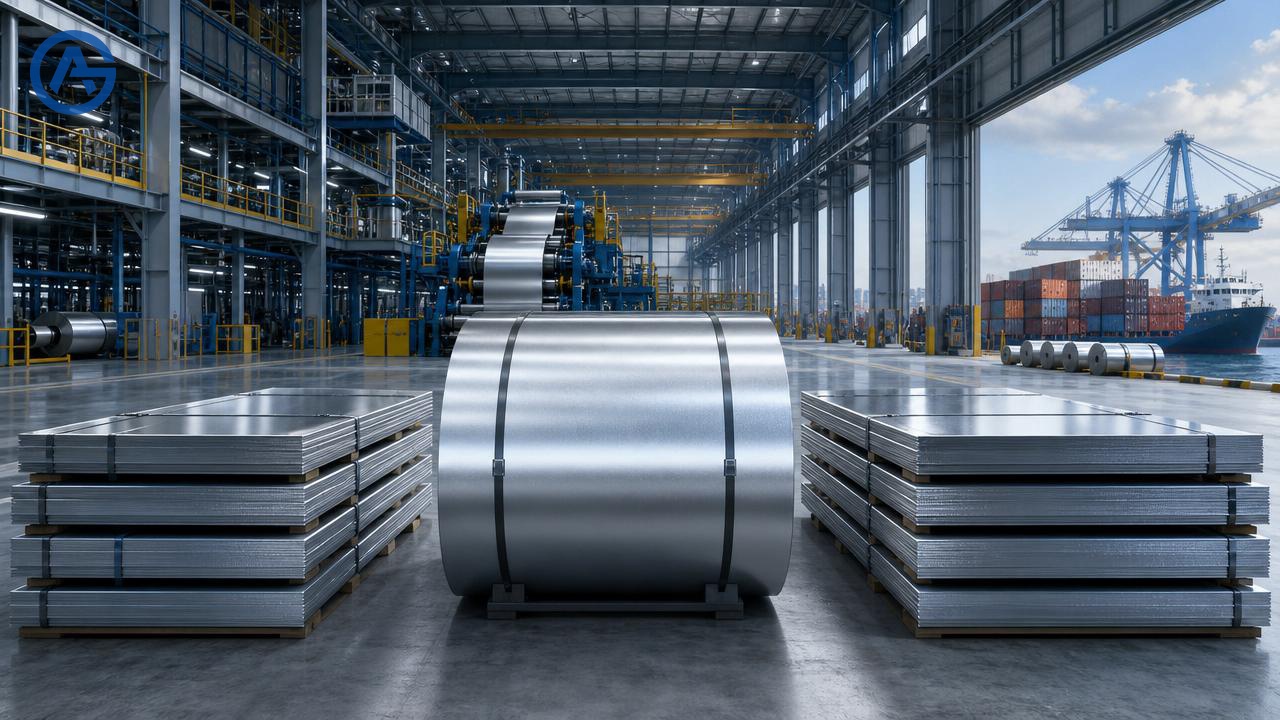
In 2026, Hot-dip galvanized steel buyers face a more complex market shaped by raw material volatility, energy costs, trade policy shifts, and regional supply constraints. For business decision-makers, understanding these cost trends and supply risks is essential to protecting margins, securing stable procurement, and improving long-term planning. This article explores the key market drivers and practical sourcing insights that can help companies respond with greater confidence.
For manufacturers, EPC contractors, distributors, and infrastructure investors, Hot-dip galvanized steel is not just a commodity line item. It directly affects corrosion performance, service life, downstream fabrication efficiency, and project cash flow. In a market where zinc prices can change within weeks and lead times can move from 15 days to 45 days depending on region and coating demand, procurement strategy matters as much as unit price.
Companies sourcing from China and other major steel exporting regions are also watching port logistics, exchange-rate movements, and import policy adjustments. For buyers who need stable quality, flexible specifications, and export coordination across multiple destinations, supplier capability has become a risk-control issue rather than a simple purchasing decision.
2026 Cost Drivers Behind Hot-dip Galvanized Steel
The cost structure of Hot-dip galvanized steel in 2026 is shaped by four major variables: base steel pricing, zinc consumption, energy input, and regional trade costs. Buyers that track only the headline steel price often underestimate the real delivered cost by 8% to 15%.
Base steel and zinc remain the two biggest inputs
For most galvanized coils, sheets, pipes, and structural sections, the substrate steel usually represents the largest cost share. Zinc is the second major driver, especially when coating requirements move from common ranges such as Z80–Z120 up to Z180–Z275. A higher coating mass improves corrosion resistance, but it also raises unit cost in a visible way.
In practical sourcing terms, a project that changes from a lighter coating to a heavier one can see a measurable increase in per-ton cost. That difference may still be justified if the steel is intended for marine, agricultural, or outdoor industrial use where service life expectations can exceed 10 to 20 years.
Why coating specification changes total ownership cost
- Lower coating mass may reduce upfront price but increase repainting or replacement risk.
- Z180–Z275 is often preferred for harsher outdoor exposure and longer maintenance intervals.
- Coating choice should be aligned with the asset life cycle, not only tender-stage budget pressure.
Energy, environmental control, and processing overhead
Hot-dip galvanizing is energy intensive. Furnace operation, molten zinc bath control, pickling, fluxing, drying, and post-treatment all add processing cost. If electricity, natural gas, or industrial compliance charges rise by even 5% to 10%, processors may need to adjust quotations quickly.
This matters especially for customized orders involving tight thickness tolerances, slit widths, cut-to-length sheets, or export packaging. Every extra process step adds labor hours, handling time, and a higher risk of yield loss. For large-volume buyers, a small processing premium per ton can become significant over 500 to 2,000 tons.
The table below shows a practical framework for understanding where 2026 galvanized steel pricing pressure is likely to come from during supplier negotiations.
The key takeaway is that Hot-dip galvanized steel pricing should be evaluated as a full delivered package. Decision-makers who compare only ex-works or spot prices may overlook coating upgrades, packing costs, and logistics exposure that later reduce project margins.
Major Supply Risks for Hot-dip Galvanized Steel Buyers
Supply risk in 2026 is no longer limited to availability. It includes shipment timing, specification consistency, inspection coordination, and policy uncertainty. In many export markets, a 2-week delay can trigger installation disruption, liquidated damages, or working-capital pressure.
Regional supply constraints and lead-time variability
Lead times for Hot-dip galvanized steel can vary widely by product type. Standard galvanized coils may ship in 15–30 days under normal conditions, while customized sheets, profiled products, or special pipes may require 30–45 days. If demand surges in construction or energy sectors, mills may prioritize larger contracts or domestic supply obligations.
Buyers should also account for inland transport from mill to port, customs filing windows, and vessel booking uncertainty. Even when production is complete, export scheduling can add another 7–14 days depending on destination and seasonal congestion.
Quality inconsistency and specification mismatch
A lower quote is risky if the supplier cannot reliably control thickness tolerance, coating adhesion, surface finish, or packing integrity. For decision-makers, the most expensive mistake is often not a higher purchase price but a rejected shipment, rework loss, or jobsite delay caused by material mismatch.
Common issues include confusion between nominal and minimum coating mass, unclear references to standards, and differences between commercial tolerance and project tolerance. A buyer expecting strict export-grade control should verify technical details before deposit payment, not after production starts.
Four supply-risk checkpoints before order confirmation
- Confirm steel grade, thickness range, width, coating mass, and application use.
- Align on inspection method, test certificate format, and acceptance criteria.
- Verify lead time by production stage: booking, rolling, galvanizing, packing, shipment.
- Review trade term, claims process, and document accuracy for customs clearance.
The matrix below helps procurement teams assess the most common supply-side risks associated with Hot-dip galvanized steel and define practical controls before signing a contract.
These controls are not complicated, but they significantly reduce procurement uncertainty. A buyer that formalizes technical and shipping checkpoints early is usually better protected against disputes and hidden cost escalation.
How Business Decision-Makers Should Source in 2026
A stronger sourcing strategy for Hot-dip galvanized steel combines market timing, specification discipline, and supplier capability review. The goal is not simply to chase the lowest number on a quote sheet. It is to secure the right material, within the required timeline, at a manageable landed cost.
Build procurement around application-specific requirements
Decision-makers should begin with use-case clarity. Galvanized steel for roofing, cable trays, ducts, guardrails, structural fabrication, or water-related outdoor components may require different coating ranges, surface conditions, and forming performance. A mismatch at this stage can create avoidable waste throughout the supply chain.
At minimum, procurement teams should define 6 critical items before RFQ release: product type, substrate grade, thickness, width or section size, coating requirement, and destination packing standard. If any of these remain vague, quote comparison becomes unreliable.
Use multi-batch planning instead of one-time buying
When the market is volatile, splitting demand into 2 or 3 shipment batches can reduce timing risk. This approach is particularly useful for annual consumption plans above 1,000 tons, where a single purchase decision may expose the company to an unfavorable price cycle or inventory burden.
A staged model also allows buyers to adjust coating levels, dimensions, or destination volumes based on project progress. It improves cash-flow flexibility and reduces the chance of overcommitting to a specification that later changes.
A practical 5-step sourcing workflow
- Define technical scope and annual or quarterly demand volume.
- Request quotation with clear coating, tolerance, and packing requirements.
- Review total landed cost under FOB, CFR, or CIF scenarios.
- Approve pre-production details, inspection method, and document template.
- Track shipment milestones and evaluate supplier performance after delivery.
Why supplier depth matters in export procurement
For international buyers, supplier value increasingly depends on coordination capability. That includes product integration, communication speed, customization support, and responsiveness when specifications change. A supplier with export experience across 80 or more countries is generally better prepared to handle documentation differences, packing expectations, and destination-specific requirements.
Angang Metal Products (Shandong) Co., Ltd., based in Shandong Province, operates in one of China’s key steel industry centers and focuses on the research, production, and export of steel products. For B2B buyers, this matters because regional industrial depth can support broader sourcing options, faster coordination, and one-stop procurement for multiple galvanized steel and related steel product needs.
A service-oriented export partner can also help buyers compare material routes, coordinate customized solutions, and reduce transaction friction across inquiry, sampling, production, inspection, and shipment. In uncertain market conditions, those operational advantages can be as valuable as a narrow price concession.
Key Questions to Ask Before Placing a Hot-dip Galvanized Steel Order
Before final approval, decision-makers should pressure-test both commercial and technical assumptions. A short list of targeted questions often prevents expensive errors later in the project cycle.
Commercial and logistics questions
- How long is the quoted price valid: 3 days, 5 days, or 7 days?
- Is the lead time counted from deposit receipt, order confirmation, or production slot allocation?
- Does the quote include export seaworthy packing, edge protection, and marking?
- What is the MOQ for each thickness or width combination?
Technical and inspection questions
- What coating standard or coating mass is being offered for the galvanized steel?
- What tolerance range applies to thickness, width, and coil weight?
- Can the supplier provide mill test documentation and pre-shipment verification?
- How will claims be handled if quantity shortage or visible damage is found at destination?
These questions do not slow procurement. In most cases, they accelerate clean execution by reducing ambiguity. For projects with repeat demand, they can also become the basis for a standard purchasing checklist used across future bids and supply cycles.
Moving from Price Comparison to Supply Security
The 2026 market for Hot-dip galvanized steel requires a broader procurement lens. Cost pressure will continue to come from substrate steel, zinc usage, processing energy, and freight fluctuations. Supply risk will remain tied to lead-time reliability, technical consistency, and export execution quality.
For business decision-makers, the best response is a disciplined sourcing framework: specify clearly, compare full landed cost, verify supplier coordination strength, and split purchasing where necessary. This approach improves margin protection and reduces the operational impact of market volatility.
If your company is evaluating Hot-dip galvanized steel for construction, manufacturing, infrastructure, or distribution needs, working with an experienced export-oriented steel supplier can improve both procurement efficiency and supply stability. Contact Angang Metal Products (Shandong) Co., Ltd. to discuss your specification, request a customized sourcing plan, or learn more about one-stop steel procurement solutions for your market.
Please give us a message