NEWS
Contact Us Anytime, We Are Always Here For You
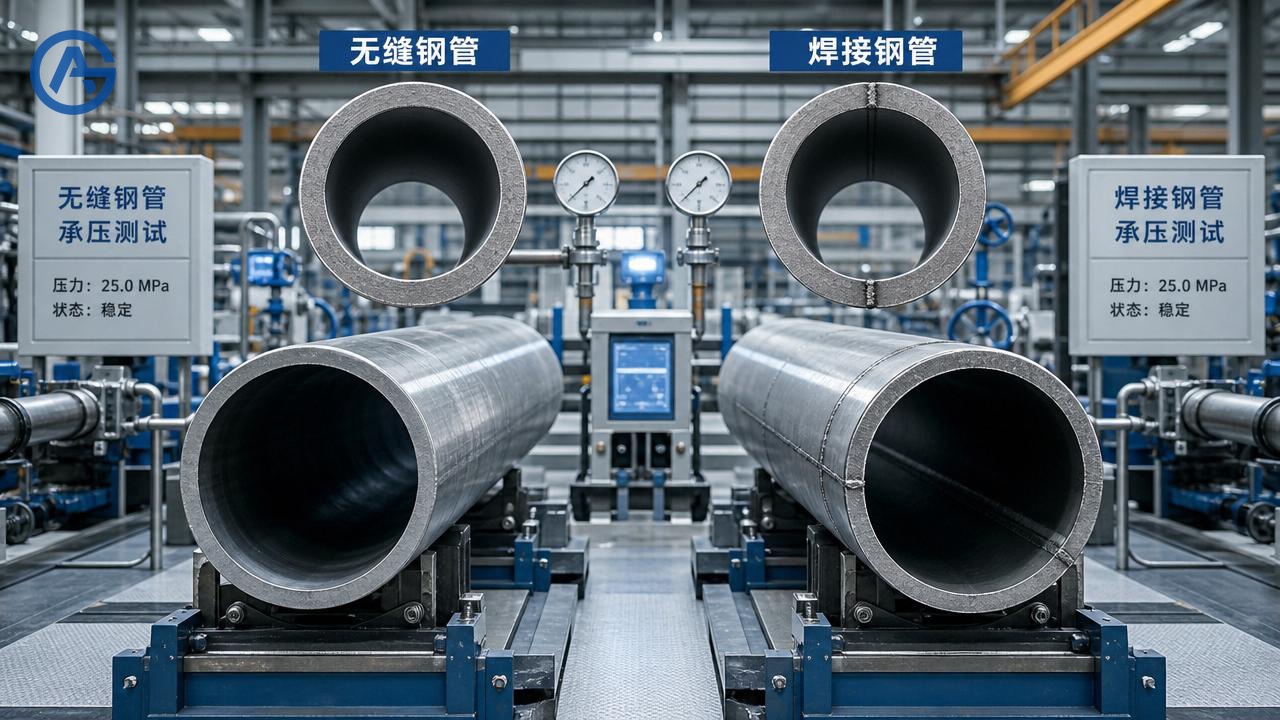
When pressure tolerance determines safety, cost, and service life, choosing between welded and Seamless Steel Pipe becomes a critical technical decision. For technical evaluation, the issue is not only rated strength. It is also about fatigue response, leak risk, stress concentration, and failure location under real operating pressure.
Across the steel industry, rising pressure classes, stricter inspection standards, and longer design cycles are changing pipe selection logic. In many applications, the comparison between welded pipe and Seamless Steel Pipe now centers on failure probability, lifecycle stability, and inspection confidence rather than unit price alone.
Pressure service expectations are shifting toward lower failure risk
In recent years, piping systems have faced harsher service conditions. Higher pressure, temperature fluctuation, and more frequent start-stop cycles have exposed weak points that were once acceptable in moderate duty environments.
This shift matters because pipe failure rarely starts from average wall strength. It often begins at local discontinuities, residual stress zones, weld defects, or corrosion-assisted crack initiation points.
That is why Seamless Steel Pipe remains highly relevant. Its continuous structure removes the longitudinal weld seam, which is often the first area reviewed during high-pressure design and failure analysis.
Where welded pipe usually fails first
Welded pipe does not fail simply because it is welded. Quality production can deliver reliable results. However, when failures happen under pressure, the seam and heat affected zone deserve close attention.
- Lack of fusion or incomplete penetration in poor weld execution
- Residual stresses trapped near the weld line
- Geometry variation causing uneven stress distribution
- Reduced fatigue life under pressure cycling
- Corrosion concentration along the seam in aggressive media
In static, low-pressure service, those risks may be manageable. Under pulsation, shock loading, or elevated pressure, even small seam-related imperfections can grow into leak paths or rupture points.
Why Seamless Steel Pipe often shows stronger real-world pressure reliability
The key advantage of Seamless Steel Pipe is structural continuity. Because there is no welded seam, hoop stress distributes more uniformly around the circumference during internal pressurization.
This does not mean every seamless product is automatically superior. Material grade, heat treatment, dimensional accuracy, and testing still matter. Yet the absence of a seam removes one major uncertainty from high-pressure service.
Performance factors that reduce failure tendency
In oil and gas, boilers, hydraulic lines, mechanical tubing, and high-pressure process systems, this predictability is often more valuable than a small material saving at purchase stage.
The failure gap becomes wider under specific operating trends
The difference between welded pipe and Seamless Steel Pipe is not equal in every application. It becomes more visible when service conditions amplify stress concentration or crack growth.
Conditions that increase the value of seamless construction
- High internal pressure with limited safety margin
- Frequent thermal expansion and contraction
- Pressure pulsation from pumps or compressors
- Corrosive fluids that attack weak metallurgical zones
- Critical lines where leakage creates severe downtime
- Low-temperature or high-temperature duty requiring stable toughness
Under these conditions, the question is not whether welded pipe can pass a standard test. The real question is which product offers fewer failure triggers over years of operation.
This is where Seamless Steel Pipe generally leads. It reduces concern around seam integrity, especially when maintenance intervals are long and operating loads are variable.
Cost logic is changing from purchase price to failure economics
Traditional comparison often focused on initial cost. Welded pipe usually appears more economical. But pressure service decisions increasingly include downtime, inspection cost, replacement frequency, and consequence of failure.
A lower upfront price can lose value quickly if a seam defect leads to leakage, shutdown, environmental cleanup, or emergency replacement. In that context, Seamless Steel Pipe can provide better lifecycle economics.
Main drivers behind this decision shift
For many steel system designs, the pressure question has become a risk-management question. That is why seamless products are often specified in the most sensitive sections of a pipeline network.
What deserves closer review before choosing welded or Seamless Steel Pipe
A sound decision requires more than a generic material comparison. Pressure failure risk depends on process conditions, pipe standard, production quality, inspection data, and actual service profile.
Key checkpoints for technical review
- Design pressure, surge pressure, and pressure cycling frequency
- Operating temperature range and thermal shock possibility
- Fluid corrosiveness and expected erosion pattern
- Applicable standards such as ASTM, API, EN, or DIN
- NDT scope, hydrostatic testing, and traceability requirements
- Installation environment and consequence of leakage
If several of these variables trend toward severity, Seamless Steel Pipe usually becomes the more conservative and dependable option. That is especially true where failure costs exceed raw material savings.
A practical judgment: which fails less under pressure?
In moderate applications, high-quality welded pipe can perform well. Yet under higher pressure, dynamic loading, and stricter reliability demands, Seamless Steel Pipe generally fails less often because it removes the seam-related weak link.
The most reliable choice is not based on theory alone. It depends on verified manufacturing quality, standard compliance, and matching the pipe type to the actual duty cycle.
Angang Metal Products (Shandong) Co., Ltd., based in one of China’s major steel centers, supports global steel supply with quality-focused service and customized solutions. With export experience across more than 80 countries and regions, the company helps align Seamless Steel Pipe selection with pressure demands, application standards, and long-term project reliability.
If the goal is fewer failures under pressure, start with service conditions, not only price. Then compare test data, standards, and lifecycle risk. In demanding systems, Seamless Steel Pipe is often the safer answer and the smarter long-term investment.
Please give us a message