NEWS
Contact Us Anytime, We Are Always Here For You
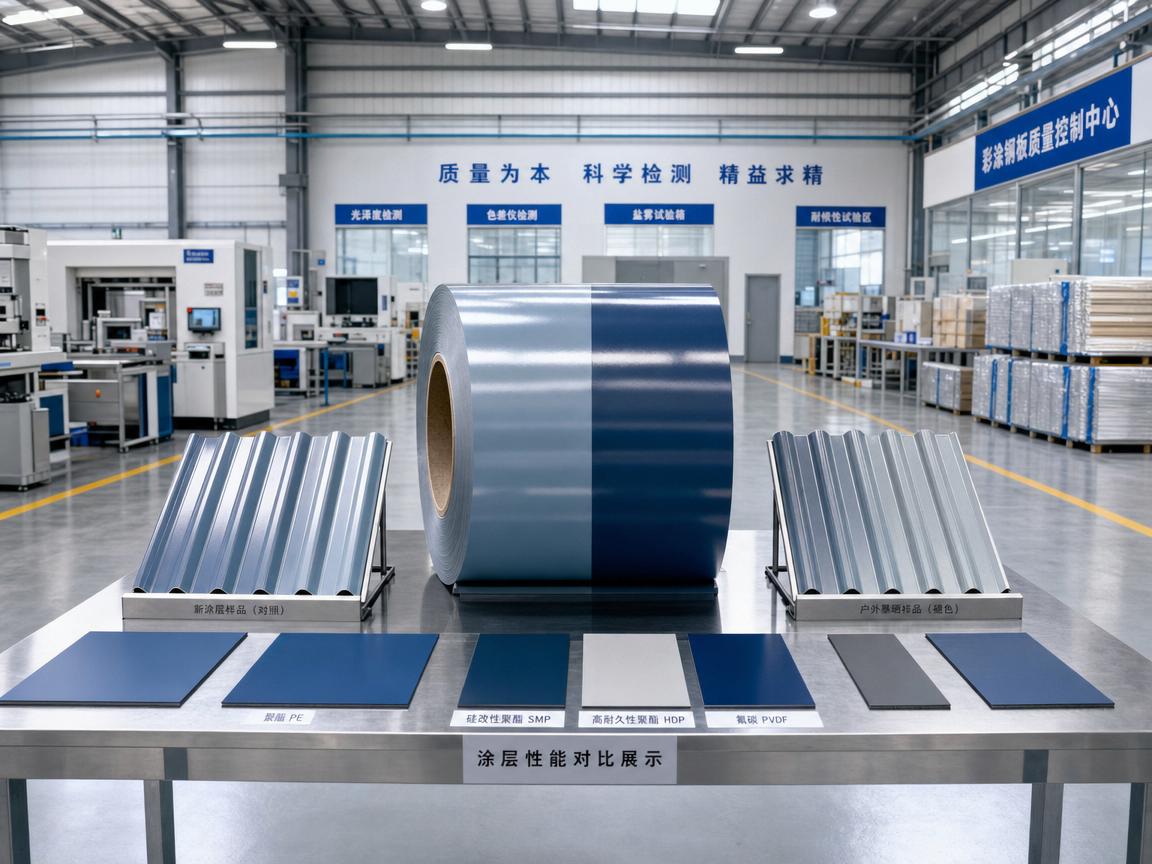
When Color Coated Steel starts fading earlier than expected, it often signals issues that quality control and safety teams cannot afford to ignore. From coating quality and substrate preparation to UV exposure and storage conditions, several factors can affect long-term color performance. Understanding these common causes helps identify risks early, improve inspection standards, and protect both product reliability and project safety.
Why does Color Coated Steel fade too soon in real projects?
For quality control personnel and safety managers, early fading is not just an appearance issue. In many steel applications, color stability is linked to coating integrity, weather resistance, maintenance planning, and client acceptance. When Color Coated Steel loses color too early, it may indicate coating breakdown, resin instability, pigment weakness, or poor process control during manufacturing.
In roofing, wall cladding, industrial workshops, warehouses, and public infrastructure, visible fading can trigger complaints long before structural failure appears. That creates a difficult situation for inspection teams: the product may still be mechanically sound, but confidence in durability drops quickly. In harsh environments, fading may also be an early warning of deeper coating degradation that can later lead to chalking, cracking, or corrosion.
- Premature fading often increases reinspection frequency and quality documentation pressure.
- It can affect safety planning when coated steel is used in exposed industrial or coastal environments.
- It may point to inconsistent supplier control over paint system, substrate pretreatment, or curing process.
The difference between normal aging and abnormal fading
All prepainted steel products will experience some color change over time, especially under intense sunlight, heat, humidity, and airborne chemicals. The real question is whether the fading rate matches the project environment and the original coating specification. Quality teams should separate expected weathering from abnormal performance loss.
Abnormal fading usually appears unevenly, happens earlier than the design expectation, or concentrates on specific batches, roof slopes, façade orientations, or exposed storage lots. That pattern often helps trace the root cause back to coating selection, process stability, handling, or environmental mismatch.
What are the most common causes of premature fading?
When reviewing Color Coated Steel complaints, inspection teams should avoid focusing only on the topcoat. Fading usually results from a chain of factors rather than a single defect. The most reliable approach is to review the substrate, pretreatment, coating chemistry, curing, storage, transport, and service environment together.
1. Inadequate paint system selection
Not all paint systems deliver the same UV resistance. Polyester coatings may be suitable for many general-purpose applications, but severe sunlight, desert heat, tropical moisture, or coastal exposure often require stronger weathering performance. If the resin system does not match the project environment, fading can appear much earlier than expected.
2. Low pigment durability
Pigment quality has a direct effect on long-term color retention. Some bright or saturated shades fade faster than neutral or light-stable colors. If cost pressure leads to lower-grade pigment selection, the Color Coated Steel may pass initial visual inspection but fail during outdoor exposure. This is especially important for projects with strict façade consistency requirements.
3. Poor pretreatment and surface preparation
Before painting, the steel substrate must be properly cleaned and chemically pretreated. Oil residue, oxide contamination, weak conversion layers, or uneven surface activity can reduce coating adhesion and durability. Even when fading appears to be a color issue, poor pretreatment may be part of the underlying cause because it weakens the coating system from the base upward.
4. Curing problems during production
If the coating is under-cured or over-cured, performance can decline. Under-curing may leave the film chemically unstable, while over-curing may embrittle the coating and reduce its long-term resistance to UV and weather. For QC teams, curing consistency is one of the most important process control points in prepainted steel manufacturing.
5. Excessive UV exposure and harsh service conditions
Even a well-made Color Coated Steel product can fade faster in areas with high UV index, elevated roof temperatures, salt-laden air, acid rain, chemical vapors, or continuous moisture condensation. Fading should always be evaluated in relation to end-use conditions rather than judged by indoor storage expectations.
6. Improper storage and transportation
Condensation inside packaging, prolonged outdoor storage, stacked moisture, and direct sun exposure before installation can damage the coating surface early. Quality and safety teams often overlook this stage. Yet many fading complaints begin before the steel is even installed, especially when coils or sheets remain at site for extended periods without ventilation or cover control.
How can QC teams distinguish root causes faster?
A structured inspection path helps reduce disputes between procurement, site teams, and suppliers. The table below gives a practical way to connect field symptoms with likely causes and recommended checks for Color Coated Steel.
This type of symptom-based review is useful because it prevents teams from blaming one factor too early. In many cases, a fading issue in Color Coated Steel involves both specification mismatch and handling error. A complete quality judgment needs process records, site photos, environment data, and batch identification.
A practical inspection checklist
- Confirm the end-use environment, including UV intensity, humidity, temperature swing, and possible salt or chemical exposure.
- Check whether the ordered coating system matches the actual application, not just the budget target.
- Review supplier documentation for coating thickness, curing control, and pretreatment process consistency.
- Inspect storage and transport records, especially signs of condensation, wet packing, or long outdoor exposure.
- Compare sun-facing and shaded areas to identify whether degradation is environmental or batch related.
Which coating choices reduce fading risk the most?
Selection is one of the biggest pain points for procurement and quality teams. A lower initial price can create a higher lifecycle cost if the Color Coated Steel fades early and leads to claims, repainting, or replacement. The comparison below helps connect common coating options with fading risk and project fit.
The key lesson is simple: Color Coated Steel should not be selected by color card and price alone. For quality and safety teams, the right coating system depends on exposure class, required service life, maintenance expectations, and client tolerance for visual change.
What should buyers verify before approving Color Coated Steel?
Procurement decisions often move fast, especially when project schedules are tight. But if fading risk is ignored during supplier approval, later corrections become expensive. A pre-purchase review should be practical, documented, and aligned with actual site conditions.
Critical review points for procurement and QC
- Confirm substrate type and coating structure, including topcoat, primer, and pretreatment sequence.
- Ask for nominal coating thickness and coating mass details where relevant to the steel specification.
- Review whether the recommended use includes marine, industrial, tropical, or high-UV environments.
- Check packaging, transport, and storage instructions to avoid moisture-related early damage.
- Align acceptance criteria for color variation, appearance, and surface condition before shipment.
Why documentation matters
For safety managers, documented traceability is essential. If Color Coated Steel is used on roofs, enclosures, equipment housings, or factory expansions, the organization should know what was ordered, what environment it was intended for, and how it was stored before use. This supports root-cause analysis if fading appears later.
How do standards, testing, and compliance support better decisions?
While project requirements vary by market, quality teams generally benefit from checking whether Color Coated Steel is supplied with reference to recognized coating and steel practices. Standards do not eliminate fading by themselves, but they improve consistency in specification, testing, and acceptance language.
Depending on the destination market and application, buyers may review general requirements related to painted steel sheet appearance, coating thickness, adhesion, flexibility, corrosion resistance, and weathering evaluation. For export projects, alignment between technical documents and local expectations is often just as important as the product itself.
- Use clear inspection language for color consistency, film condition, and visible surface defects.
- Ask in advance how nonconformity will be handled if batch variation is discovered before installation.
- For international sourcing, verify that packing, labeling, and traceability support customs and site receiving requirements.
Common mistakes that make fading complaints worse
In practice, many fading claims become harder to resolve because teams miss the early warning signs or fail to preserve evidence. A disciplined response can save time and reduce disputes between contractor, owner, and supplier.
Mistakes to avoid
- Assuming all Color Coated Steel performs the same just because thickness and color look similar at delivery.
- Ignoring roof orientation, chemical exposure, or local climate when defining the coating requirement.
- Storing coils or sheets in wrapped bundles on damp ground or under direct sun for too long.
- Mixing materials from different production batches on one visible elevation without control.
- Raising a claim without recording batch number, installation date, site condition, and affected area pattern.
These mistakes matter because they blur the difference between product-related fading and site-related damage. For quality teams, evidence quality is often as important as the coating quality itself.
FAQ: what do quality and safety teams ask most often?
How can I judge whether Color Coated Steel is suitable for a coastal project?
Start with the actual distance to the coastline, prevailing wind, humidity, salt deposition risk, and expected maintenance level. Then compare those conditions with the coating system being offered. In coastal settings, higher weather resistance and better corrosion protection are often necessary. Do not approve based only on color and base thickness.
Does darker Color Coated Steel fade faster?
Not always, but darker colors usually absorb more heat, which can accelerate visible aging in high-temperature conditions. Some bright shades also depend heavily on pigment quality. The more important question is whether the specific color has been paired with a coating system suitable for the service environment.
What should be checked when fading appears shortly after delivery?
Review storage condition first. Look for trapped moisture, water staining, damaged wrapping, prolonged outdoor exposure, and stacked heat buildup. Then confirm whether the affected material belongs to one batch or multiple batches. Early discoloration after delivery often involves storage or transport factors, not only manufacturing.
Can early fading mean a safety issue?
It can. Fading alone is mostly visual, but when it is accompanied by chalking, blistering, cracking, or edge corrosion, the risk becomes more serious. In safety-sensitive facilities, any sign of coating deterioration should trigger a wider inspection because protective performance may already be declining.
Why work with Angang Metal Products (Shandong) Co., Ltd.?
For international buyers, the challenge is rarely just buying steel. It is buying the right Color Coated Steel for the right climate, schedule, compliance expectation, and budget. Angang Metal Products (Shandong) Co., Ltd., based in Shandong Province, operates from one of China’s major steel industry centers and focuses on the research, development, production, and export of steel products for global markets.
Its business network covers more than 80 countries and regions across Asia, Europe, Africa, and America. That global exposure matters for quality control and safety teams because it supports a more practical understanding of different project environments, procurement habits, packaging expectations, and delivery coordination needs.
What support can be discussed before placing an order?
- Parameter confirmation for substrate, coating structure, and intended use environment.
- Product selection support for general outdoor, industrial, high-UV, or coastal applications.
- Discussion of delivery schedule, packaging method, and export-oriented logistics coordination.
- Customized solution review for project-based procurement and one-stop steel sourcing.
- Sample support and quotation communication based on project requirements and quantity planning.
If your team is evaluating Color Coated Steel for a new project or investigating premature fading in current supply, it is worth discussing the application environment, expected service life, storage conditions, and coating options before final approval. A focused technical and commercial review at the sourcing stage can reduce claim risk later and help protect both appearance performance and long-term steel reliability.
Please give us a message