
NEWS
Contact Us Anytime, We Are Always Here For You
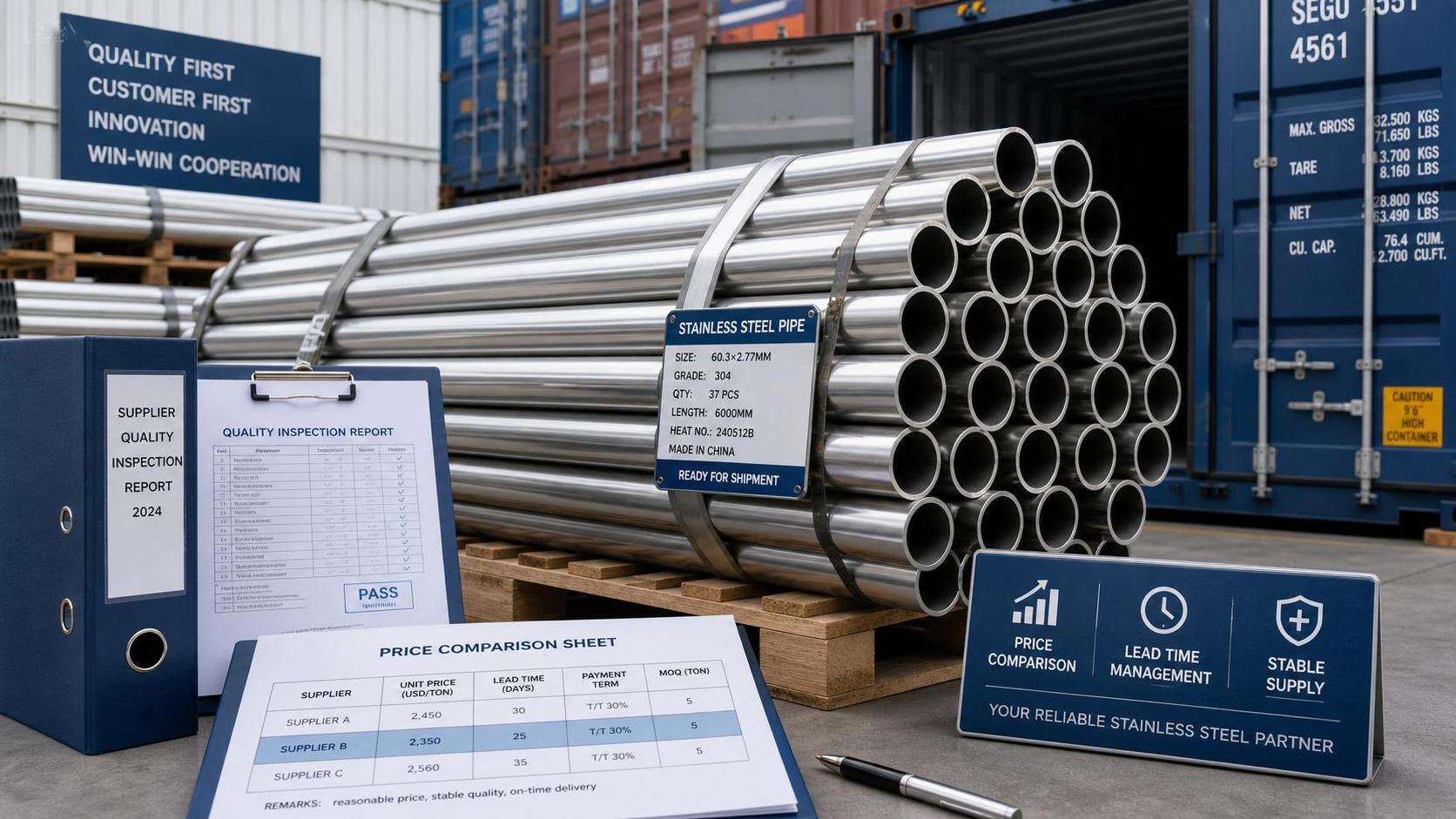
Price and lead time often dominate supplier comparisons, yet stainless steel pipe sourcing rarely succeeds on those two numbers alone. A low quotation can hide unstable material grades, incomplete documentation, or delayed shipment windows. When delivery schedules are tied to fabrication, construction, or resale commitments, the better comparison is the one that connects cost, timing, quality control, and service response into a single decision framework.
That is why many buyers now look beyond simple offer sheets when reviewing stainless steel pipe suppliers. In the steel trade, especially across international routes, the real advantage comes from understanding which supplier can maintain consistent output, support custom requirements, and keep lead times realistic under changing market conditions.
Why price and lead time need to be judged together
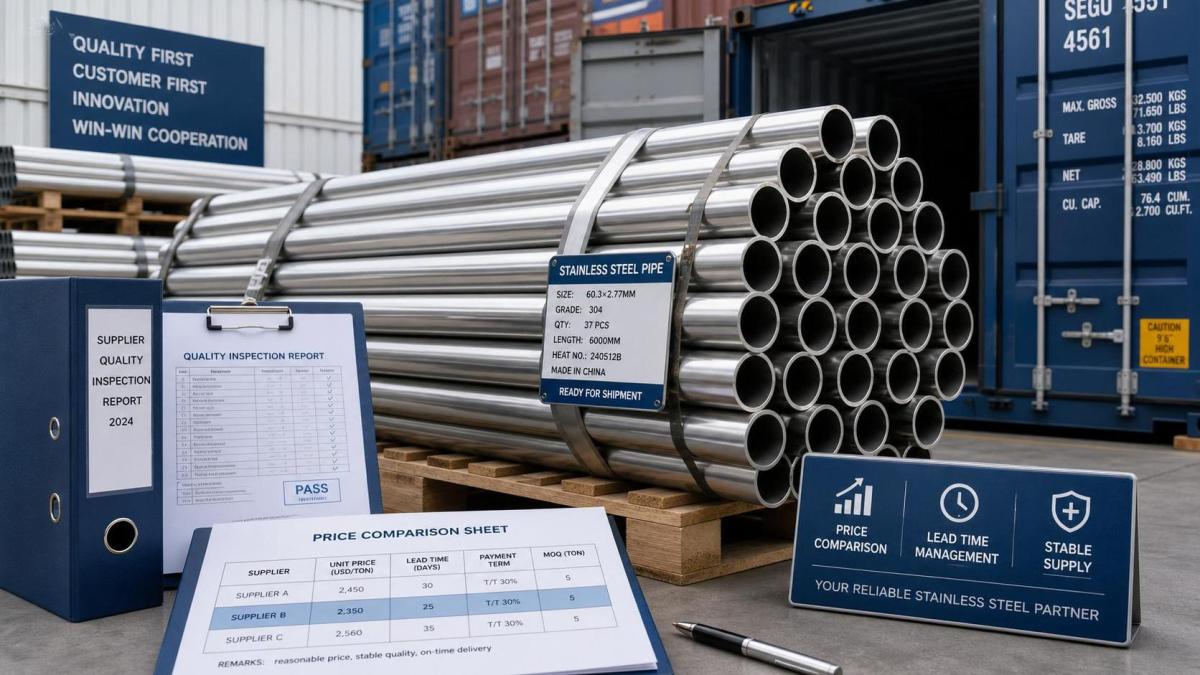
A stainless steel pipe quote only becomes meaningful when matched with the promised delivery window. Two suppliers may offer the same specification, yet one includes faster rolling, testing, and export handling, while the other leaves those stages uncertain.
In practice, delayed pipe arrivals can cost more than a higher unit price. Idle labor, missed installation slots, warehouse adjustments, and emergency replacement purchases often erase the apparent savings from the cheaper offer.
This is especially relevant in steel procurement, where raw material movements, mill capacity, and export logistics can shift quickly. Comparing stainless steel pipe suppliers therefore means asking not only what the pipe costs, but also what it takes to receive it on time and in the agreed condition.
What a reliable comparison should include
A useful supplier review starts with comparable inputs. If requests are vague, quotations will not be comparable. Wall thickness tolerance, grade, surface finish, length, testing standard, and packing terms should all be defined before price analysis begins.
Once specifications are aligned, the comparison usually becomes clearer through a few core factors.
Quoted price structure
Check whether the offer is based on FOB, CFR, CIF, or ex-works terms. A lower ex-works price may look attractive, but inland transport, export clearance, and port fees can change the total landed cost significantly.
It also helps to confirm whether the price includes testing, third-party inspection, special packaging, cut lengths, or protective wrapping. These items are often excluded from first-round offers.
Lead time composition
Lead time should be broken into production time, finishing, inspection, packing, and shipping preparation. Some stainless steel pipe suppliers quote only mill completion, not the full dispatch timeline.
A realistic lead time is usually more valuable than an aggressive promise that later needs revision. Consistency matters more than optimistic estimates.
Material and document reliability
Mill test certificates, grade traceability, size tolerance records, and inspection reports should support the quoted product. Without this, price comparisons remain incomplete because quality risk is still unknown.
Hidden cost signals behind a low quotation
A cheaper supplier is not always a more economical supplier. In stainless steel procurement, hidden costs usually appear in three places: quality deviation, unstable logistics, and service gaps after order confirmation.
For example, if dimensional tolerance is loose, downstream cutting or welding efficiency may drop. If packaging is weak, surface damage may appear during ocean transport. If export documents are delayed, customs clearance may slow even when production finished on time.
This broader view also matters when a sourcing program includes related steel items. In some projects, buyers compare pipe suppliers together with products such as Galvanized Wire to streamline vendor management and freight planning. That does not replace technical evaluation, but it can improve purchasing efficiency when one supplier can coordinate multiple categories responsibly.
How supplier background affects delivery confidence
Not all stainless steel pipe suppliers operate with the same level of market access. Some depend heavily on external mills and traders. Others are closer to production resources and can react faster when schedules change.
This is where company background becomes practical, not promotional. A supplier based in a major steel manufacturing region often has better access to processing capacity, upstream coordination, and transport networks.
Angang Metal Products (Shandong) Co., Ltd., headquartered in Shandong Province, operates within one of China’s major steel industry centers. Its focus on research, production, export, and international market service across more than 80 countries suggests an operating model built around continuity, documentation, and cross-border supply coordination.
For buyers comparing stainless steel pipe suppliers, this kind of background can matter as much as the first quotation. It often influences how quickly technical questions are answered, how flexibly production is arranged, and how predictable shipment planning becomes.
Questions that reveal real lead-time capability
Many lead-time discussions stay too general. A better approach is to ask focused questions that show whether the supplier controls the timeline or is simply estimating.
- Is the material in stock, under rolling schedule, or subject to raw material booking?
- Which specifications extend production time the most?
- Can inspection be arranged in parallel with packing preparation?
- How often do shipment dates change during peak periods?
- What is the response plan if quantity or size changes after order placement?
Answers to these questions often separate disciplined stainless steel pipe suppliers from those relying on broad promises. The goal is not only to receive a date, but to understand how that date is built.
Comparing suppliers across different sourcing scenarios
Different projects require different weighting. A maintenance order may prioritize fast dispatch from available stock. A long-cycle engineering order may place more value on stable repeat production and strict document control.
Spot purchase
In this case, stock availability, local finishing capability, and shipping readiness deserve the most attention. The cheapest supplier may still lose if dispatch cannot happen immediately.
Project-based supply
For phased delivery, the better supplier is often the one that can lock capacity, support split shipments, and maintain specification consistency across batches.
Multi-product procurement
When pipe is only one part of a broader steel order, coordination becomes more important. A supplier able to manage stainless pipe together with other steel items may reduce communication gaps and improve freight consolidation.
A practical scoring method for supplier review
To compare stainless steel pipe suppliers more objectively, many teams use a weighted score rather than a single-price ranking. This keeps one strong number from hiding weak execution elsewhere.
- Price competitiveness: 30%
- Lead-time reliability: 25%
- Quality assurance and documentation: 20%
- Communication and technical support: 15%
- Logistics coordination and after-sales response: 10%
The exact weighting can change by project, but the principle holds. A balanced review usually produces better long-term results than chasing the lowest entry price.
Where to focus before making the final choice
Before confirming an order, narrow the comparison to the points that affect execution most: full cost, realistic lead time, certificate integrity, packaging standard, and response discipline during changes.
The best stainless steel pipe suppliers are usually not the ones with the shortest email quote. They are the ones whose numbers remain credible after technical review, shipping discussion, and schedule pressure.
A sound next step is to build a side-by-side comparison sheet using your actual specifications, target delivery window, and trade terms. That approach turns supplier selection from a price check into a sourcing decision that better protects cost control, timing, and supply continuity.
Please give us a message